Geography is destiny, but partisan outrage is a choice.
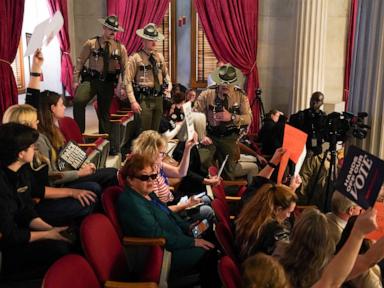
The media circus surrounding Tennessee’s redistricting of the 5th Congressional District—specifically the "splitting" of Nashville—is a masterclass in missing the point. If you listen to the standard beltway analysis, you’ll hear a tired refrain: Democracy is under siege, and a vibrant community was sliced up solely to silence a specific voting bloc.
It is a convenient narrative. It is also an intellectual lazy Susan.
The reality of the situation is far more clinical, far more grounded in constitutional law, and far more representative of how power actually shifts in the 21st century. We are moving away from the era of "protected pockets" and into an era of regional integration. The loudest critics aren't actually mourning the loss of representation; they are mourning the loss of a guaranteed, uncompetitive incumbency.
Let’s dismantle the "Stolen District" myth with the precision it deserves.
The Myth of the Monolithic Urban Core
The foundational error in the competitor’s argument is the assumption that a city must be a single political unit to be "represented." This is a pre-digital mindset.
Nashville, like Austin or Charlotte, is no longer just a dot on a map. It is an economic engine that drives an entire region. By splitting the 5th District across three new zones, the state legislature didn't "dilute" Nashville's power—they exported it.
Instead of having one lonely representative in a deep-blue silo who is ignored by the majority party, Nashville now has three representatives who must answer to the city’s economic needs. If you are a business owner in Davidson County, you now have three doors to knock on in D.C. instead of one. That isn't a loss of influence; it’s a diversification of your political portfolio.
Critics call this "cracking." I call it "integration."
Why should a major metropolitan area be cordoned off from its surrounding suburbs and rural neighbors? That artificial separation is what creates the hyper-polarization everyone claims to hate. When a district is 80% one party, the representative has zero incentive to talk to the other side. By forcing urban interests to merge with rural ones, you force a conversation that otherwise wouldn't happen.
The Racial gerrymandering Fallacy
The loudest scream in the room is that this move targets Black voters. This is where the "lazy consensus" becomes dangerous.
Federal law, specifically the Voting Rights Act (VRA), is very clear about what constitutes a violation. You must prove that a minority group is large enough and geographically compact enough to constitute a majority in a single-member district. Tennessee’s 5th was never a majority-Black district. It was a "crossover" district where a white liberal plurality voted with a Black minority.
The VRA does not grant a constitutional right to "crossover" districts.
When the Supreme Court ruled in Shelby County v. Holder and more recently signaled a tighter interpretation of Section 2 in various stay orders, they sent a message: Race cannot be the predominant factor in drawing lines unless you are satisfying a very specific remedial need.
The Tennessee legislature followed the law. They prioritized traditional redistricting principles—compactness, contiguousness, and following county lines where possible—over the social engineering of maintaining a partisan stronghold. To suggest that the map is illegal simply because it changed the partisan math is to fundamentally misunderstand the difference between "politics" and "civil rights."
The Incumbency Protection Racket
Let’s be brutally honest: most redistricting outcries are actually funeral dirges for career politicians.
Jim Cooper, who held the 5th for decades, saw the writing on the wall and retired. The media framed this as a tragedy. I see it as a long-overdue market correction.
When a district remains unchanged for decades despite massive shifts in population and industry, it becomes a stagnant pool. Nashville has exploded in growth. The "Old Nashville" that the 5th District represented no longer exists. To demand that the maps stay the same is to demand that time stands still.
Imagine a scenario where a CEO refuses to reorganize a failing department because "that’s the way we’ve always done it." That CEO would be fired. Yet, we expect our geographic boundaries to remain frozen in amber to protect the comfort of the political class.
The new map reflects the Tennessee of 2026, not 1996. It reflects a state that is increasingly Republican in its outskirts and increasingly complex in its center.
The False Promise of Non-Partisan Commissions
The "solution" usually offered by the outraged is the "Independent Commission."
This is a fantasy. There is no such thing as a non-partisan human being. Every "independent" member of a commission has a bias, a background, and a preferred outcome. The only difference is that when a legislature draws the maps, they are at least accountable to the voters. You can vote them out. You cannot vote out a "commissioner" appointed by a judge or a committee.
Legislative redistricting is messy, partisan, and aggressive. It is also exactly how the Founders intended the system to work. It is a political process, not a mathematical one. To try and "sanitize" it with "data-driven neutral algorithms" is to outsource our democracy to programmers who bake their own biases into the code.
The Brutal Truth About "Fairness"
The word "fair" is the most misused term in American politics. To the loser, "fair" means "a map where I could have won." To the winner, "fair" means "a map that reflects my mandate."
If Tennessee is a state where the GOP consistently wins the popular vote by 20 to 30 points, why should the congressional delegation be split 50/50? A "fair" map in a deep-red state should, by definition, produce a deep-red delegation.
The move in Tennessee wasn't a "shattering" of democracy; it was the removal of a protected bubble. The Nashville elite are now forced to play by the same rules as the rest of the state. They have to build coalitions. They have to persuade people who don't look or think like them.
Isn't that exactly what we say we want in our politics?
The Diversification of Political Capital
If you want to understand the future of power, stop looking at the precinct level and start looking at the regional level.
The "Nashville Three"—the representatives for the new 5th, 6th, and 7th districts—now have a vested interest in the success of the Nashville airport, the Nashville stadium, and the Nashville tech corridor. Previously, these were the concerns of one person. Now, they are the concerns of three.
In a world where federal funding is a zero-sum game, having more seats at the table with an interest in the "Golden Triangle" of Tennessee is an objective win for the city’s long-term infrastructure. The short-term partisan pain of losing a Democratic seat is outweighed by the long-term gain of having a broader base of advocacy in the majority party.
The High Cost of the "Safe Seat"
Safe seats breed radicalization. When a candidate only has to worry about a primary from their own left or right flank, they stop talking to the middle.
The old 5th District was a safe seat. It was a place where ideas went to retire. By making the new districts more competitive—or at least more diverse in their constituency—the legislature has introduced a variable of unpredictability.
Republican representatives who now represent parts of Nashville cannot simply ignore the urban vote. They have to moderate their stance on transit, on education funding, and on urban development if they want to avoid a massive "no" vote from the most economically active part of their district.
The "cracking" of Nashville forces the GOP to govern the city, not just ignore it.
Stop Asking the Wrong Questions
The media is asking, "How can we stop gerrymandering?"
The better question is: "Why are we still using 18th-century geographic boundaries to represent 21st-century economic interests?"
If you’re upset about the Tennessee map, your problem isn't with the lines. Your problem is with the fact that our system ties political identity to a physical backyard. Until we move toward proportional representation or multi-member districts, the party in power will always draw lines to their advantage.
Crying "foul" only when the other side does it isn't activism; it’s just being a bad loser.
Tennessee didn't break democracy. It just stopped pretending that Nashville is an island. The city is part of a state, and that state is red. The map finally admits it.
If you want to win, stop complaining about the boundaries and start winning the arguments. The lines moved. Your strategy should too.
Don't mourn the 5th District. It was a relic of a partitioned Tennessee. The new map is an invitation to the arena. If the urban core wants power, it’s time to stop relying on a protected silo and start convincing the rest of the state that its success depends on the city's health.
The era of the "safe" urban enclave is over. Good riddance.