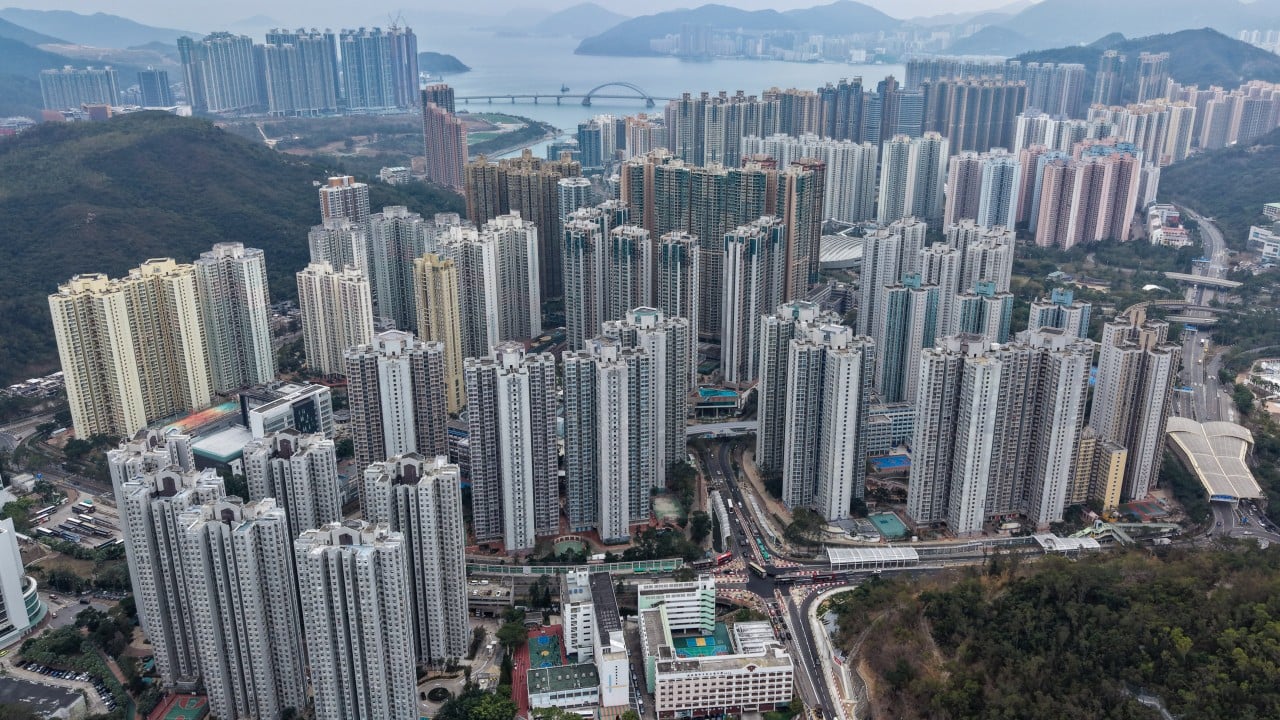
The air inside the sales office at Blue Coast II smelled of expensive cologne and anxiety. It was a scent familiar to anyone who has spent a decade watching the Hong Kong skyline. For years, that scent had vanished, replaced by the stagnant odor of empty showrooms and the quiet desperation of real estate agents scrolling through silent phones. But in the spring of 2024, the atmosphere changed. The silence didn't just break; it shattered.
Consider Mrs. Wong. She is a composite of the thousands who flooded the market this quarter—a secondary school teacher who has spent five years watching her deposit lose its luster in a savings account. For sixty months, she hesitated. Every time she looked at a two-bedroom flat in Kowloon, the math felt like a trap. Interest rates were climbing, the "spices"—those punitive stamp duties designed to cool a boiling market—were a heavy shroud, and the general mood was one of retreat.
Then, the government moved its hand.
In late February, the Financial Secretary scrapped all cooling measures. Suddenly, the "spices" were gone. No more Buyer’s Stamp Duty. No more New Residential Stamp Duty. For the first time in fourteen years, the shackles were off.
The Dam Breaks
What followed was not a gentle trickle. It was a deluge. By April 2024, the numbers painted a picture of a city waking up from a long, feverish sleep. Residential sales surged to 8,551 transactions in a single month. To put that in perspective, it was a jump of over 115% from March. It was the highest volume the city had seen in nearly three years.
The dry data says "market recovery." The reality on the ground looked like chaos.
At the new developments in Wong Chuk Hang, the queues wrapped around the block. These weren't just the ultra-wealthy parking offshore cash. These were families, young professionals, and mainland investors who had been waiting for the signal to return. They were betting on the fundamental truth of Hong Kong: land is the only thing they aren't making more of.
The numbers tell us that the total value of these transactions hit $92.7 billion HKD. That is a staggering amount of capital suddenly unlocked. But capital isn't a ghost; it’s a choice. It’s the choice to believe that the floor has finally been reached.
The Math of New Hope
Why now? It wasn't just the removal of taxes. It was the alignment of three distinct pressures.
First, the banks started to blink. While global interest rates remained stubborn, local lenders in Hong Kong began offering more competitive terms to capture the sudden rush. Second, developers grew tired of waiting. They didn't raise prices to match the new demand; they kept them low to clear inventory. They realized that a sold unit at a 10% discount is better than a "premium" unit that has sat empty for twenty-four months, accruing holding costs.
Third, and perhaps most importantly, the psychological barrier fell.
In a city like Hong Kong, real estate is more than shelter. It is the civic religion. When prices were sliding—down roughly 25% from their 2021 peak—everyone was a skeptic. But the moment the volume spiked, the "Fear of Missing Out" (FOMO) replaced the "Fear of Falling Further."
Mrs. Wong, our teacher, saw the headlines in March. She saw that 1,000 units sold in a weekend. She realized that if she waited for the "perfect" bottom, she would likely miss the window entirely. She signed the papers on a Saturday afternoon, her hands shaking slightly, not because she was afraid of the debt, but because she was relieved to finally be back in the game.
The Invisible Stakes
There is a ripple effect to this surge that goes beyond the commission checks of agents. When the property market moves, the city breathes.
Think of the renovations. Eight thousand new owners mean eight thousand kitchens being reconsidered, eight thousand sets of curtains, and thousands of contractors finally finding steady work again. The retail sector, long battered by a shift in tourism patterns, finds a second wind when locals feel wealthier because their primary asset has stopped hemorrhaging value.
However, the surge carries a hidden tension. The "spices" were removed to stimulate the economy, but their absence means the gates are also open for speculation. We are seeing a return of the "flippers," though in a more cautious form. The government’s gamble is that the high-interest-rate environment will act as a natural brake, preventing the market from overshooting into another unsustainable bubble.
It is a delicate balance. If the market heats up too fast, the affordability crisis that has defined Hong Kong for a generation will only deepen. If it doesn't heat up enough, the wealth effect stays dormant, and the city's post-pandemic recovery remains sluggish.
A Different Kind of Buyer
The profile of the buyer has shifted. In the mid-2010s, it was about aggressive growth. Today, it’s about defensive stability.
Mainland Chinese buyers, once the primary engine of the luxury sector, are returning under the "Top Talent Pass Scheme." These are not just investors looking for a place to park money; they are professionals moving their lives to the SAR. They see a market that has corrected significantly and a tax environment that is now more favorable than it has been in over a decade.
For them, a flat in Tin Shui Wai or a luxury pad in Kai Tak represents a stake in a city that is reinventing its identity. They aren't buying the Hong Kong of 2019. They are buying the Hong Kong of 2030.
The statistics from the Land Registry show that the primary market—new builds—is outperforming the secondary market. Developers are aggressive. They are offering flexible payment plans and "buy now, pay later" schemes that the average individual seller simply cannot match. This has created a two-speed market. New builds are flying off the shelves, while older walk-ups in Sham Shui Po still sit, waiting for their turn in the sun.
The Long Shadow of the Rate Hike
Despite the euphoria, a shadow remains. The US Federal Reserve's decisions still dictate the rhythm of the Hong Kong Interbank Offered Rate (HIBOR).
Every buyer hitting the showrooms today is doing so with the knowledge that their mortgage payments are significantly higher than they would have been three years ago. The removal of the stress test by the Hong Kong Monetary Authority helped—it lowered the bar for entry—but it didn't lower the monthly bill.
This is why the current surge is so fascinating. It is a rational-irrational moment. Rationally, the costs are high. Irrationally, the collective consciousness of the city has decided that the risk of staying out is now greater than the risk of jumping in.
The Quiet Morning After
The frenzy of April will eventually cool. Markets cannot sustain triple-digit growth month-over-month. But the "fever" has broken. The period of paralysis, where buyers and sellers stared at each other across a canyon of uncertainty, is over.
Walking through Central today, you can see the change. The property agencies, once ghostly and dim, are bright. The digital displays showing "SOLD" stickers across floor plans are back.
It isn't a return to the crazy days of 2017. It’s something different. It’s a city recalibrating. It’s thousands of people like Mrs. Wong deciding that despite the geopolitical shifts, despite the interest rates, and despite the scars of the last few years, they still want to own a piece of this vertical forest.
The surge in sales is more than a bar chart on a Bloomberg terminal. It is a massive, collective vote of confidence in a future that, until very recently, seemed clouded in fog.
The fog hasn't entirely lifted. But for the first time in a long time, the people of Hong Kong are willing to walk through it. They are holding their breath, pens poised over contracts, watching the ink dry on a new chapter for the city's most enduring obsession.


