The sea is not blue in the Strait of Hormuz. It is a metallic, bruising gray, slick with the history of the world’s energy needs and the constant, vibrating threat of metal meeting metal. At its narrowest point, only twenty-one miles of water separate the jagged cliffs of Oman from the Iranian coast. This is the carotid artery of global commerce. If it narrows too much, the world goes cold.
Imagine a deck officer named Elias standing on the bridge of a Very Large Crude Carrier (VLCC). He is three hundred meters of steel and oil, a floating island carrying two million barrels of crude. He is not a politician. He is a man who thinks about his daughter’s piano lessons and the salt-crust forming on the bridge windows. But today, Elias is looking at the radar. He sees dots. Small, incredibly fast dots.
These are the "fast attack ships" of the Iranian Revolutionary Guard Corps. They are tiny compared to Elias’s behemoth, but they move with the frantic, stinging precision of hornets. They don't need to sink him. They only need to scare the insurance markets into a cardiac arrest.
The Weight of a Single Warning
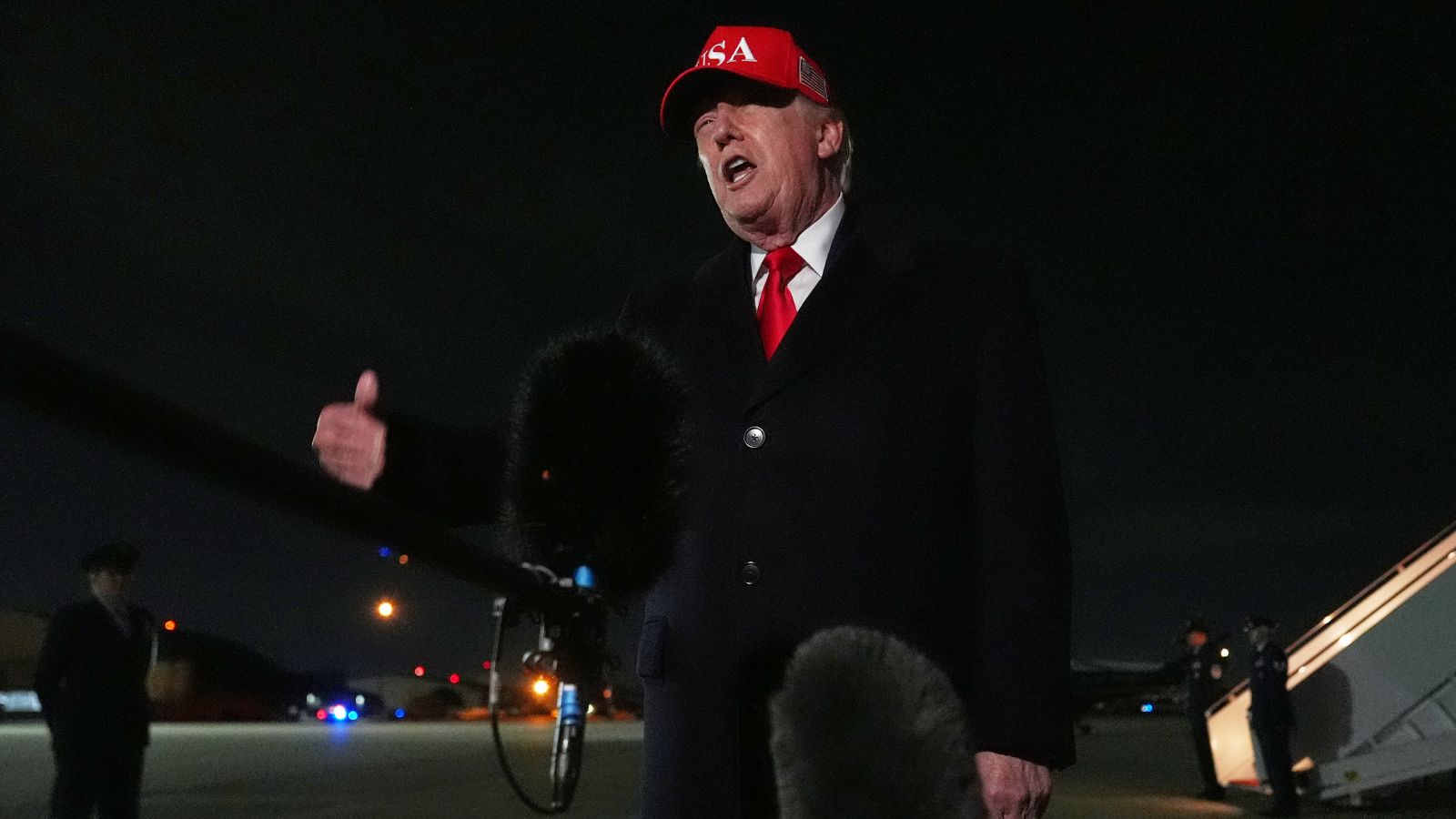
When the American President issues a directive to "shoot down and destroy" any Iranian gunboats harassing U.S. ships, the words don’t just hang in the air of a briefing room. They travel across the seabed via fiber optic cables. They land in the ears of nineteen-year-old sonar technicians. They ripple through the algorithms of commodity traders in London and Singapore.
The tension isn't theoretical. It’s physical.
The blockade of the Strait isn't always a physical wall of ships. Often, it’s a blockade of the mind. When the Strait is declared a "no-go" or when the threat level spikes, the cost of moving a single barrel of oil doesn't just tick up—it leaps. We are talking about war risk premiums. These are the hidden taxes on existence. You don't see them until you wonder why your grocery bill is twenty percent higher, or why the plastic casing on your new phone costs more than the electronics inside.
Petroleum is the ghost in the machine of everything we touch. It’s in the aspirin in your cabinet and the fertilizer in the soil of the Midwest. When the Strait of Hormuz chokes, the ripple effect is a slow-motion car crash that starts in the Persian Gulf and ends at your kitchen table.
The Physics of the Hornet’s Nest
The Iranian strategy is a masterpiece of asymmetrical thinking. They know they cannot win a traditional broadside engagement against a carrier strike group. Instead, they utilize swarms.
Think of it as a cloud of gnats against a giant with a sledgehammer. The giant is infinitely more powerful, but the gnats are everywhere, and they only need to land one sting to make the giant flinch. These fast attack craft are often equipped with Chinese-made C-704 anti-ship missiles or even simple multiple-launch rocket systems. They play a high-stakes game of "chicken," buzzing within yards of billion-dollar destroyers.
The danger isn't just a stray missile. It’s a misunderstanding.
On a rolling deck in the heat of a hundred degrees, a young officer has seconds to decide if a speeding boat is a group of bored fisherman or a suicide mission packed with high explosives. One wrong twitch of a finger and the narrative shifts from "geopolitical tension" to "regional conflagration." The President’s warning was an attempt to change the math of that decision. It was a signal that the era of "strategic patience" had been swapped for a "zero-tolerance" posture.
The Invisible Ledger
Why does this matter to someone who doesn't own a car or a stock portfolio?
The Strait carries roughly one-fifth of the world’s total oil consumption. Even more critical is the Liquefied Natural Gas (LNG) that flows through these waters, primarily from Qatar. Entire nations, like Japan and South Korea, rely on this specific passage for their very survival. If the "blockade" mentioned in the headlines becomes a sustained reality, these countries don't just face a recession; they face a total systemic collapse of their power grids.
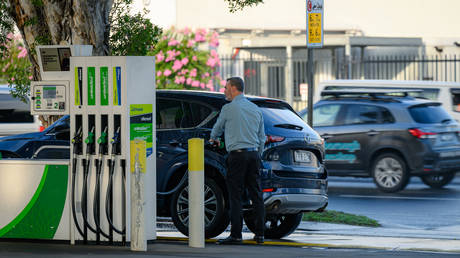
We live in a "just-in-time" world. We no longer keep massive stockpiles of anything. Your local gas station likely has enough fuel for three days. Your grocery store has food for four. The global supply chain is a delicate lattice of glass, and the Strait of Hormuz is the heavy door that everyone is slamming.
When we talk about "strikes" and "fast attack ships," we are really talking about the fragility of the modern world. We are talking about how a few dozen men in fiberglass boats can hold the global economy hostage because we have built our entire civilization on a foundation of cheap, flowing carbon.
The Human Cost of High-Stakes Poker
Back on the bridge, Elias watches the gunboats peel away. For now.
His pulse slows, but he knows the return journey will be the same. He represents the human element often lost in the headlines. There are thousands of men and women like him—mariners from the Philippines, India, and Norway—who find themselves at the center of a proxy war they didn't sign up for. They are the ones who feel the vibration of the engines and the cold sweat of a radar lock.
The rhetoric from Washington is designed to provide "deterrence." It is a word that sounds clean and academic. In reality, deterrence is a psychological state where the fear of the consequence outweighs the desire for the action. By threatening to "destroy" the fast attack craft, the goal is to make the Iranian commanders realize that the cost of harassment has become too high.
But deterrence is a fragile thing. It requires the other side to believe you aren't bluffing.
If the blockade holds, or if the "warning" is ignored, we move into a territory that no algorithm can predict. The history of the 20th century is littered with "small" naval incidents that spiraled into decades of bloodshed. The Gulf of Tonkin. The USS Maine. These were sparks in dry grass.
The Strait of Hormuz is the driest grass on earth.
The Mirror of the Strait
This isn't just a story about boats and oil. It’s a mirror. It shows us exactly how dependent we remain on a handful of volatile miles of water. We talk about the cloud, about digital currencies, and about the "new economy," but all of it still rests on the backs of sailors like Elias and the physical movement of prehistoric liquid through a narrow channel.
The "fast attack ships" are a reminder that the world is still small, and that geography is a destiny we haven't yet escaped.
As the sun sets over the Persian Gulf, the water turns that deep, bruised purple again. The carriers continue their patrols. The gunboats dock in their hidden coves along the jagged Iranian coastline. The traders go home, and the world waits for the next headline, the next tweet, or the next radar blip that might change everything.
We are all on that ship with Elias. We are all watching those dots on the radar, hoping they stay as dots, and never become the flash that lights up the dark.
The silence on the water is heavy. It is the silence of a held breath. It is the quiet before the world realizes that the "security of the seas" is a luxury we’ve taken for granted, and that the price of that luxury is being renegotiated in real-time by men who have never met, but who hold each other’s lives—and ours—in their hands.