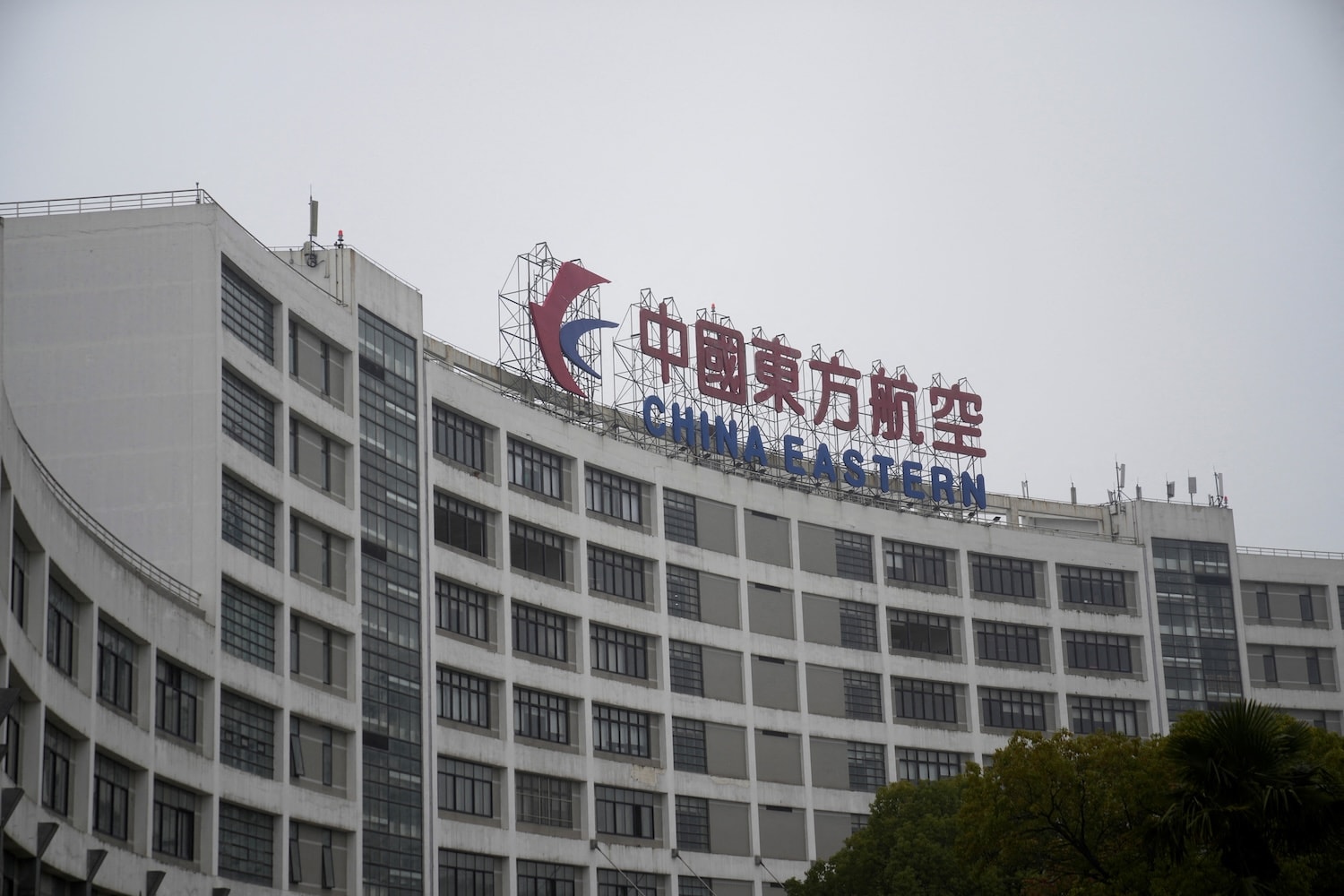
The financial press loves a hero, even an accidental one. The current consensus—that China’s "invisible hand" is a stabilizing force in a market rattled by Middle Eastern conflict—is a comforting fairy tale for traders who want to sleep at night. They see China snapping up Iranian barrels under the radar and assume Beijing is a safety net. They think China is "rebalancing" the market.
They are wrong.
Beijing isn't rebalancing anything. It is exploiting a structural decay in the global energy order to build a private, insulated system that works for one person: Xi Jinping. What the mainstream media calls "market stability" is actually the slow-motion destruction of the open oil market. If you’re looking at the Brent or WTI ticker to understand the impact of the Iran-Israel tension, you’re watching a movie that’s already been edited for television. The real action is happening in the dark pools and the "teapot" refineries of Shandong, and it’s not a stabilization play. It’s a liquidation of the West’s influence over energy pricing.
The Myth of the Invisible Hand
Economists use the term "invisible hand" to describe self-regulating market forces. Applying it to China's role in the Iran-Western conflict is a category error. China’s hand is visible, heavy, and holding a leash.
The standard argument goes like this: China buys Iranian oil that the rest of the world can’t touch due to sanctions. This keeps Iranian production online, prevents a global supply shock, and keeps prices at the pump in Ohio from hitting $7.00 a gallon.
Here is the nuance the "stability" crowd misses: This isn't a market. It’s a closed-loop barter system. By absorbing 90% of Iran’s exports, China has effectively removed Iran from the global supply-and-demand equation. When supply is cordoned off and sold at a massive, opaque discount—often $10 to $15 below Brent—it doesn't stabilize the price. It creates a tiered reality.
I’ve spent years watching energy desks react to Middle East flare-ups. The "pros" always look for the supply gap. But there is no gap when China is subsidizing its own industrial base with "blood oil" while the rest of the world pays the "clean" market premium. This isn't rebalancing; it’s a massive transfer of competitive advantage. Every discounted barrel China buys is a nail in the coffin of Western manufacturing.
Teapot Refineries and the Illusion of Data
If you want to see where the "invisible hand" gets dirty, look at the independent refineries, known as "teapots." These aren't the state-owned giants like Sinopec. These are the agile, morally flexible operators that facilitate the trade.
They don't use SWIFT. They don't use dollars. They use the Digital Yuan (e-CNY) or simple barter. When you see "People Also Ask" queries like "How does China pay for Iranian oil?", the answer isn't a bank transfer. It's a shipment of telecommunications equipment, infrastructure parts, or consumer goods.
This creates a massive blind spot for Western analysts. Most oil data relies on transparent shipping manifests and financial settlements. When China uses a "ghost fleet"—old tankers with their transponders turned off or spoofed to look like they are in Malaysian waters—the data goes dark.
I've seen analysts try to model this using satellite imagery of floating roofs on storage tanks. It’s guesswork. We are flying blind into a geopolitical storm because we assume the market is still a single, unified entity. It’s not. It’s splintering.
The Sanction Paradox
Western policymakers believe sanctions are a scalpel. In reality, they are a fertilizer for the "dark market."
Every time Washington tightens the screws on Tehran, they don't reduce the flow of oil. They just lower the price for China. It’s a perverse incentive structure. The U.S. does the hard work of enforcing the "rules-based order," and China collects the "sanctions dividend."
Let’s run a thought experiment. Imagine a scenario where the U.S. successfully blocks every Iranian barrel. Global prices spike to $150. Inflation destroys the Eurozone. The U.S. enters a deep recession.
Now look at the reality: The U.S. allows the ghost fleet to sail because the alternative is a global economic meltdown. China knows this. They are calling the bluff. They aren't a "stabilizer"; they are a parasite on the American enforcement mechanism. They are using the threat of global inflation to force the West to look the other way while they build a sanctions-proof energy corridor.
The Petroyuan Is a Red Herring
The "doom-and-gloom" crowd loves to scream about the end of the Petrodollar. They claim the Iran-China trade is the first step toward the Yuan becoming the global reserve currency.
This is another "lazy consensus" take.
China doesn't want the Yuan to be the global reserve currency. Being the reserve currency requires an open capital account, which means Beijing would have to give up control over its currency's value. They will never do that.
The real threat isn't the Petroyuan replacing the Petrodollar. The threat is the fragmentation of the system. We are moving toward a world where the dollar still rules the "clean" market, but a significant portion of global energy—Russia, Iran, Venezuela—moves through a "grey" market where the dollar doesn't exist.
When the world’s largest oil importer (China) and some of the world's largest producers (the sanctioned pariahs) operate outside the dollar, the Fed loses its primary weapon: the ability to export inflation.
Middle East "Peace" Through Chinese Dependence
The competitor article likely suggests China is a peacemaker because it brokered the Saudi-Iran deal. This is a surface-level reading.
China doesn't want peace; it wants dependence.
By becoming the sole buyer for Iran and the largest customer for Saudi Arabia, China is positioning itself as the ultimate arbiter of the region. But unlike the U.S., China has no interest in security guarantees. If a war breaks out, China won't send a carrier group to protect the Strait of Hormuz. They will simply negotiate a higher discount for the increased risk.
I’ve seen how this plays out in corporate boardrooms. The guy who controls the biggest contract doesn't care if the suppliers hate each other, as long as they both have to come to him to get paid. That is Xi’s Middle East strategy. It’s a cold, transactional hegemony.
The Risk Nobody Admits
The contrarian truth is that this "Chinese rebalancing" is incredibly fragile.
If China’s internal economy continues to crater—driven by a property bubble that makes 2008 look like a rehearsal—their demand for oil will drop. When the sole buyer of the world’s "grey" oil stops buying, the pariah states (Iran and Russia) will have nowhere to go.
That is when the real war starts.
A desperate Iran, unable to sell its oil even at a discount to China, becomes a much more dangerous actor than an Iran that is "managed" by Chinese demand. The current system relies on the assumption that China’s appetite for energy is infinite. It’s not.
If China’s GDP growth stays stalled at 3% or lower, the "invisible hand" will pull back, and the Middle East will explode. Not because of religious ideology, but because of a simple lack of cash flow.
The New Energy Math
Stop looking at the supply charts from the IEA or OPEC. They are increasingly irrelevant.
The new math of oil is $Brent - $ChinaDiscount + $GeopoliticalRisk.
- The Brent Price is for the West.
- The China Discount is the reward for breaking the rules.
- The Geopolitical Risk is the premium we all pay for the privilege of watching this play out.
The advice for investors isn't to "buy the dip" when Iran makes a move. The advice is to watch the Chinese credit cycle. If China can’t fund its own internal debt, it can’t sustain the shadow market. And if the shadow market collapses, the "invisible hand" becomes a fist.
We aren't seeing a rebalancing. We are seeing a hijacking. Beijing has taken the global oil market hostage, using Iranian supply as the weapon and Western inflation as the leverage. The "stability" you see on the charts is the silence before the storm. The market isn't being saved; it's being dismantled barrel by barrel.
The era of a single, transparent global oil price is dead. If you’re still trading based on that old reality, you’re not a player. You’re the liquidity.