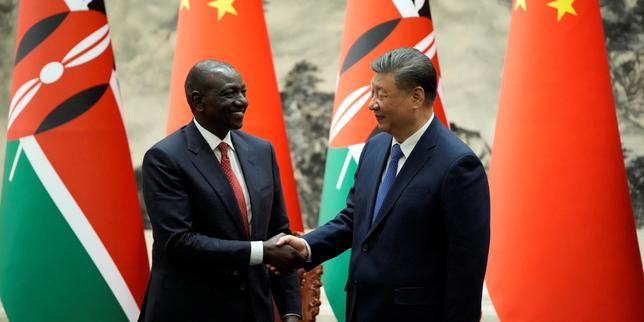
China just changed the math for global trade. Starting in late 2024, the Chinese government announced it would scrap all import tariffs for 100% of products coming from the world's least developed countries (LDCs), a group dominated by African nations. This isn't just another vague diplomatic promise made at a summit. It’s a massive shift in how the world’s second-largest economy interacts with an entire continent.
If you’ve followed China-Africa relations, you know the old story. China builds roads, Africa sells oil and minerals. That's the cliché. But this move to zero tariffs aims to flip that script. Xi Jinping’s announcement at the Forum on China-Africa Cooperation (FOCAC) means that for the first time, a major global power is opening its doors completely to African exports without the usual tax barriers. It’s a bold play to turn Africa from a raw material source into a diverse trade partner.
Why China is opening the gates now
China doesn't do anything by accident. They’re playing the long game here. By removing these taxes, they’re effectively inviting African farmers, manufacturers, and entrepreneurs to see China as their primary market. It’s about soft power, sure, but it’s mostly about supply chains. China wants to diversify where it gets its food and consumer goods. Relying too much on the West or specific Southeast Asian neighbors is a risk Beijing wants to mitigate.
This policy applies to the 33 African countries classified as least developed. We're talking about places like Ethiopia, Angola, Djibouti, and Benin. Previously, these nations had "most favored nation" status or specific agreements, but certain goods were still taxed or restricted. Now? Everything from processed coffee to textiles and specialty chemicals can enter the Chinese market at a 0% tariff rate. It’s a huge deal for a small business in Addis Ababa trying to compete with a giant in Vietnam.
The agricultural gold mine
Agriculture is where you'll see the most immediate impact. China has a massive, hungry middle class. They want high-quality avocados, specialty coffee, and organic peppers. Before this change, African exporters often struggled with thin margins because of import duties and stiff competition from South American producers.
Look at Kenya. They recently started shipping fresh avocados to China. It was a logistical nightmare at first, but the demand was through the roof. With zero tariffs, those Kenyan farmers aren't just selling a niche product; they’re competing on price with everyone else on the planet. I’ve seen how these trade shifts work. When you remove a 10% or 15% tax at the border, that money goes straight back into the pockets of the producers or allows them to drop prices to grab market share. It's basic economics, but on a continental scale.
Infrastructure meets trade
Critics love to talk about "debt-trap diplomacy." They’ll say China is just buying loyalty. Maybe. But you can't ignore the physical reality on the ground. Over the last two decades, Chinese firms built the ports, railways, and roads that now make this zero-tariff policy actually work.
Without the SGR railway in Kenya or the upgraded Port of Djibouti, a tax break wouldn't matter. You can't export if your goods rot in a truck stuck in the mud. Now that the hardware is mostly built, China is turning on the software—the trade agreements. They're making sure those railways they built actually carry goods back to the coast for export, not just one-way traffic of Chinese electronics moving inland. It makes the entire investment more sustainable for both sides.
What African businesses need to do right now
Opening the door is one thing. Walking through it is another. China has some of the strictest sanitary and phytosanitary (SPS) standards in the world. If your fruit has a hint of a pest or your processed meat doesn't meet their chemical standards, it's getting sent back. No exceptions.
African exporters can't just celebrate the zero-tax news and sit back. They need to get serious about quality control. This is the biggest hurdle I see. Many small-to-medium enterprises in West Africa have the product, but they don't have the certifications. To win in China, you need to invest in packaging, cold-chain logistics, and rigorous testing. The tax man isn't the enemy anymore; the inspector is.
The geopolitical ripple effect
Don't think for a second that Washington or Brussels isn't watching this. For years, the U.S. used AGOA (African Growth and Opportunity Act) as its primary tool to engage with Africa. But AGOA is temporary, it has political strings attached, and it’s frequently under review. China’s new policy is different. It’s cleaner. It’s "all products, all LDCs."
It puts immense pressure on Western powers to stop treating Africa as a charity case and start treating it as a serious trade bloc. When China says, "We'll take everything you produce, tax-free," it’s hard for a Western diplomat to counter that with a lecture on governance. It changes the leverage African leaders have in every other meeting they attend.
Real talk on the manufacturing shift
There’s a theory that as China’s labor costs rise, they’ll move their factories to Africa. We’ve seen bits of this in Ethiopia’s textile parks and Rwanda’s garment industry. This zero-tariff policy is the fuel for that fire. If a Chinese company moves its production to Tanzania, it can now ship those finished goods back to China without paying a dime in customs.
This creates a circular economy that actually helps Africa industrialize. It’s not just about shipping out raw copper or logs. It’s about turning that copper into wire and those logs into furniture. If the tax on finished furniture is zero, there's a massive incentive to build the factory in Africa rather than shipping the wood to China first.
Moving beyond the hype
Is this going to solve all of Africa's economic problems overnight? No. Of course not. Internal trade barriers within Africa are still a mess. It's often harder to ship a crate from Lagos to Accra than it is to ship it to Shanghai. The African Continental Free Trade Area (AfCFTA) is trying to fix that, but progress is slow.
Also, China’s economy isn't the unstoppable juggernaut it was ten years ago. Growth is slowing. Consumer spending is a bit shaky. If Chinese shoppers pull back, the zero-tariff policy won't matter because there won't be anyone to buy the goods. You have to look at this with clear eyes. It’s an opportunity, not a guarantee.
If you're an exporter or an investor, the next step is clear. Stop looking at the U.S. or European markets as your only options. Get a consultant who understands Chinese customs regulations. Study the "Green Lanes" for African agricultural products that China is setting up. Start attending the trade fairs in Changsha and Guangzhou. The gate is open. The taxes are gone. The only thing left to do is actually produce something the Chinese market wants to buy. Focus on high-value processed goods and meet those quality standards. That's how you actually win in this new era of trade.


