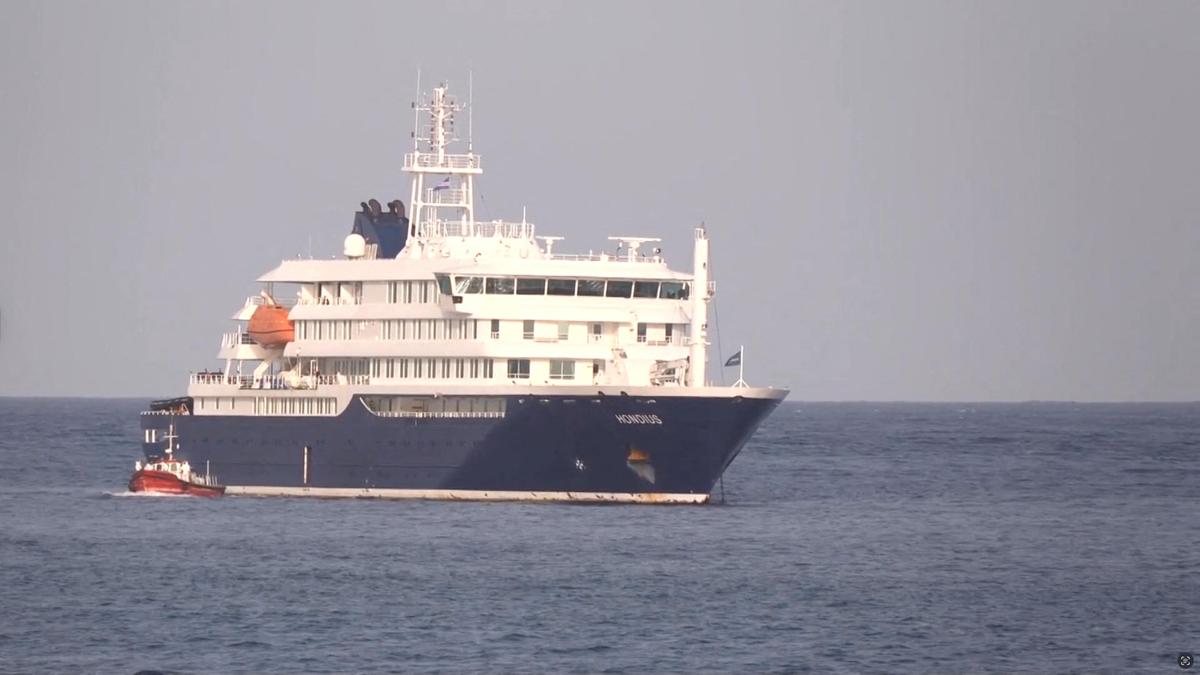
The maritime industry is currently facing a public health nightmare that defies standard cruise ship protocols. On the Atlantic Horizon, what began as a high-end voyage across the northern corridor has transformed into a containment zone for Hantavirus, a pathogen almost never associated with deep-sea travel. While initial reports focused on the number of sickened passengers, the real story lies in a catastrophic breach of biosecurity and a fundamental misunderstanding of how modern "floating cities" interact with land-based ecosystems.
Hantavirus is not a typical cruise ship ailment like Norovirus. It does not spread through contaminated buffets or poor hand hygiene among passengers. It is a zoonotic respiratory disease, typically transmitted through the aerosolized droppings of infected rodents. For this to take hold on a billion-dollar vessel suggests a systemic failure in pest management and cargo inspection that goes far beyond a few missed cleaning shifts.
The Impossible Pathogen on the High Seas
Public health officials are scrambling because Hantavirus Pulmonary Syndrome (HPS) has a mortality rate of roughly 38%. It is a brutal, fast-acting disease that fills the lungs with fluid. Finding it on a mid-Atlantic crossing is like finding a desert rattlesnake in the middle of a rainforest; it shouldn't be there, and its presence indicates that the environment has been fundamentally compromised.
Ships are supposed to be closed loops. However, the modern cruise industry relies on a massive, rapid-fire supply chain. To keep thousands of passengers fed with fresh produce and artisan meats, ships take on tons of palletized cargo at every port of call. Investigations now point toward a specific shipment of dry goods loaded in a secondary coastal terminal. If a single deer mouse or even just its nesting material was trapped in a shrink-wrapped pallet, the ship’s internal ventilation system did the rest.
How the Ventilation System Became a Delivery Mechanism
Modern cruise ships use sophisticated HVAC systems designed to recycle air and maintain temperature across thousands of individual cabins. These systems are marvels of engineering, but they have a fatal flaw when it comes to particulate matter. If rodent-contaminated dust enters the intake vents in a cargo hold or a storage locker, the ship effectively becomes a giant nebulizer.
The virus doesn't need a "patient zero" to cough on someone. It just needs the air to move. In the case of the Atlantic Horizon, the clusters of infection appeared in cabins located directly above the primary food storage decks. This suggests that the virus was pushed through the vertical service conduits, bypassing the standard HEPA filters that are usually reserved for high-traffic public areas like the theaters or casinos.
The Myth of the Sterile Vessel
The cruise industry spends millions on marketing the "pristine" nature of their ships. They want you to believe the environment is as controlled as a laboratory. The reality is that a ship is a steel honeycomb full of dark, warm, and inaccessible spaces.
Veteran inspectors know that rodents are the perennial ghost in the machine. While "rat guards" on mooring lines are standard, they are often poorly maintained or bypassed by clever pests. More importantly, the focus on "passenger-facing" cleanliness often leaves the "below-the-line" areas vulnerable. The galley corridors, the engine room sub-floors, and the massive laundry chutes provide a highway for pests that move far faster than any cleaning crew.
The Problem with Port Side Inspections
Current maritime law requires health inspections, but these are often scheduled and predictable. They focus on visible signs of infestation. Hantavirus is invisible. A pallet of flour can look perfectly clean on the outside while harboring the dried urine of an infected rodent within its core layers.
- Palletized Vulnerability: Most cruise lines outsource their logistics. The ship's crew doesn't inspect the interior of every crate.
- Rapid Turnover: Ships often spend less than 12 hours in port. This creates a "rush-to-load" culture where speed takes precedence over forensic biosecurity.
- Climate Change Shifts: As rodent populations shift their geographic ranges due to warming winters, ports that were once "safe" from Hantavirus-carrying species are now active zones.
Why Norovirus Protocols Failed Here
When the first passengers on the Atlantic Horizon reported fever and muscle aches, the ship’s medical team defaulted to the Norovirus playbook. They ramped up hand-sanitizer stations and bleached the railings. This was a waste of time.
Hantavirus requires specialized PPE and specific disinfectants that can neutralize viral proteins in dust. By treating it like a "stomach flu," the crew inadvertently stirred up more dust during deep-cleaning efforts, potentially exposing more staff. This lack of diagnostic agility is a hallmark of an industry that is prepared for the common cold but blind to the "black swan" event.
The Business of Secrecy
The cruise line’s initial response was a masterclass in corporate obfuscation. They cited "general flu-like symptoms" and "unseasonable weather" as the reasons for a sudden change in the ship’s itinerary. This delay in transparency is not just a PR move; it is a liability shield.
Once a ship declares a Hantavirus outbreak, it becomes a pariah. No port wants it. The costs of a full-ship decontamination—which involves stripping out carpets, insulation, and deep-cleaning the entire HVAC network—can run into the tens of millions. It is cheaper for the company to hope the symptoms pass than to admit the vessel is a biological hazard.
The Legal Quagmire of International Waters
Victims of this outbreak face a daunting legal path. Cruise tickets are notorious for their "fine print" that limits where and how a passenger can sue. Most require arbitration in specific jurisdictions like Florida or even foreign nations where the ship is flagged, such as Panama or the Bahamas.
Furthermore, proving exactly which pallet brought the virus onto the ship is nearly impossible once the evidence has been cooked, eaten, or thrown into an incinerator. The industry counts on this lack of traceability.
Technical Failures in Detection
The maritime industry lacks on-board diagnostic tools for rare viral pathogens. A standard cruise ship infirmary is equipped for heart attacks, broken bones, and basic infections. They do not have the PCR equipment or the specialized reagents needed to identify Hantavirus in real-time.
- Delayed Lab Results: Samples had to be flown by helicopter from the ship to a land-based lab, a process that took 48 hours.
- Symptomatic Overlap: Early-stage Hantavirus looks exactly like the common flu. By the time the "respiratory distress" phase begins, the window for effective supportive care is closing.
- Inadequate Quarantine: Ships are designed to congregate people, not isolate them. The "quarantine" cabins often share the same air supply as the rest of the deck.
The Supply Chain Must Be the Front Line
If the industry wants to prevent a repeat of this Atlantic disaster, it has to stop looking at the passengers and start looking at the pallets. The fix isn't more hand sanitizer in the lobby. It is the implementation of atmospheric sensors in cargo holds that can detect the chemical markers of rodent activity.
We need a mandatory "quarantine period" for dry goods in high-risk zones or, at the very least, a requirement that all maritime cargo be shrink-wrapped in rodent-deterrent materials. The cost of these measures is high, but the cost of turning a luxury vacation into a terminal respiratory event is higher.
The Atlantic Horizon incident isn't a fluke. It is a warning that our globalized travel networks have outpaced our localized biological defenses. The borders between the wilderness and the "sterile" world have evaporated.
Ships are no longer just transporting people; they are transporting every microscopic passenger that hitches a ride in the hold. If the industry continues to prioritize the speed of the buffet line over the integrity of the air supply, the next outbreak won't be a localized incident. It will be a fleet-wide catastrophe. The cruise industry must decide if it is in the business of hospitality or the business of survival.
The reality of the situation is that the Atlantic Horizon is still at sea, its vents still humming, its passengers still breathing the same air as the cargo below. The ship remains a floating case study in why "good enough" is a dangerous standard for global travel.