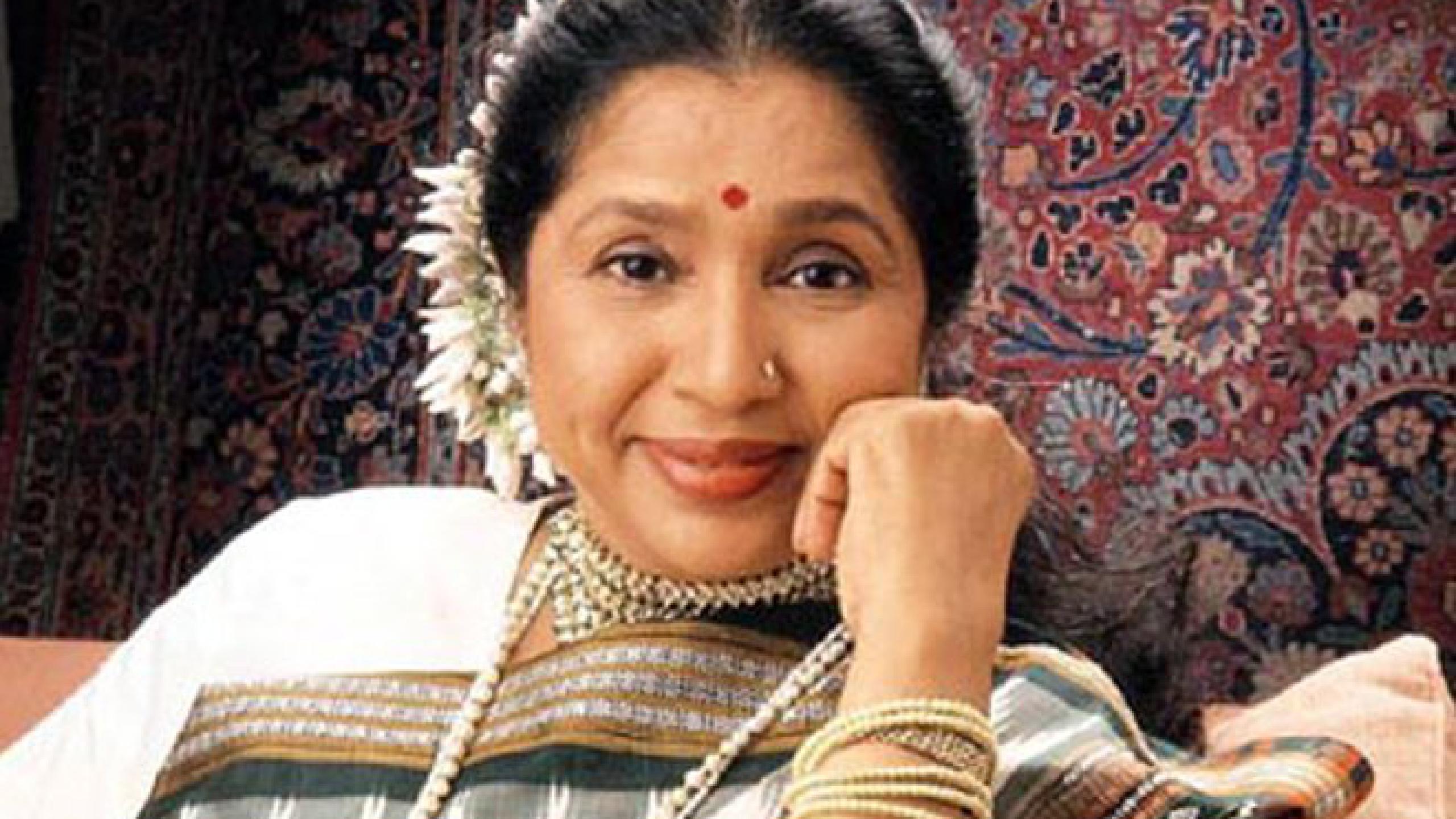
Asha Bhosle’s career was not merely a sequence of musical successes; it was a 75-year case study in market adaptation, technical versatility, and the monopolization of a specific vocal niche within a high-output industrial system. To analyze her impact is to understand the mechanics of the Indian playback industry—a system where the singer functions as the primary delivery vehicle for a film’s emotional and commercial ROI. Bhosle’s death at 92 marks the end of a specific labor model in music: the era of the "omni-genre" vocalist capable of maintaining high-frequency output across seven decades of shifting technological and aesthetic standards.
The Structural Mechanics of Playback Dominance
The playback model operates on a separation of labor where the physical actor provides the visual performance and the playback singer provides the sonic identity. Bhosle’s dominance within this system was predicated on three structural pillars:
- Vocal Elasticity and Range Differentiation: While her sister, Lata Mangeshkar, occupied the "ethereal" and "virtuous" vocal space required for traditional heroines, Bhosle strategically captured the "transgressive" and "modern" market segments. This included cabaret numbers, Western-influenced jazz, and pop-oriented tracks. By diversifying her vocal texture, she avoided direct competition with the Mangeshkar monopoly and instead expanded the market.
- High-Volume Output Efficiency: Records suggest Bhosle recorded over 12,000 songs. This volume indicates a mastery of "first-take" proficiency. In a studio system where time-to-market is critical and production budgets are sensitive to hourly rates, Bhosle’s ability to deliver a finalized track with minimal retakes made her the most cost-effective asset for music directors like O.P. Nayyar and R.D. Burman.
- Technological Adaptation: Her career spanned the transition from 78-rpm gramophone records to digital streaming. She successfully calibrated her vocal projection to suit the limitations of early monaural recording and the expansive clarity of modern multi-track systems.
The O.P. Nayyar and R.D. Burman Variable
The trajectory of Bhosle’s career cannot be understood without analyzing her partnership with two specific composers who utilized her voice as a structural element of their sound design.
The Rhythmic Precision of the Nayyar Era
O.P. Nayyar’s composition style relied heavily on horse-trot rhythms and staccato delivery. Bhosle’s contribution here was her rhythmic timing. Unlike singers who prioritized melodic fluidity, she treated the voice as a percussion instrument. This alignment of vocal delivery with rhythmic structure created a high-energy "swing" that defined the 1950s and 60s Bollywood sound.
The R.D. Burman Innovation Loop
In the 1970s, R.D. Burman introduced global influences—funk, bossa nova, and rock—to the Indian mainstream. Bhosle was the only vocalist with the technical agility to execute these complex, often syncopated arrangements. She mastered "breath control as texture," utilizing audible gasps, whispers, and growls to add a layer of production value that eliminated the need for complex electronic post-processing.
Quantifying the "Evergreen" Asset
The term "evergreen" is often used colloquially, but in a financial context, it refers to a royalty-generating asset with a low decay rate. Bhosle’s catalog remains a high-performing asset due to the "remix economy."
The second-life cycle of her music began in the late 1990s and early 2000s when tracks like "Dum Maro Dum" and "Chura Liya Hai Tumne" were sampled by global artists (e.g., The Black Eyed Peas) and local DJs. The durability of these assets stems from the fundamental integrity of the original recording’s melodic hook. Because her vocal tracks were recorded with high clarity and distinct phrasing, they are uniquely suited for digital manipulation, sampling, and re-contextualization in contemporary electronic music.
The Bifurcation of the Heroine Persona
Bhosle’s career forced a transformation in how female characters were voiced in Indian cinema. Before her influence, the vocal profile for a leading lady was narrow. Bhosle introduced a "secondary archetype"—the woman of agency, the seductress, or the modern urbanite. This created a dual-vocal economy:
- Primary Heroine (The Ideal): Characterized by high-pitched, steady-state vocals.
- Secondary/Modern Lead (The Real): Characterized by Bhosle’s use of the lower register, vibrato, and varying dynamics.
This shift allowed scriptwriters to create more complex female characters, knowing that a vocal counterpart existed to support that complexity. The "Bhosle Vocal Profile" became a shorthand for character independence.
Comparative Analysis: The Industrial Shift
The death of Asha Bhosle signifies the closing of the "monopoly era" of playback singing. The current industry operates under a different set of economic constraints:
- Fragmentation of Vocal Identity: Modern films often use five different singers for five different songs, prioritizing "vibe" over a consistent character voice. This dilutes the long-term brand equity of the singer.
- Auto-Tune and Technical Democratization: The technical perfection Bhosle achieved through years of training is now replicable via software. This lowers the barrier to entry but also reduces the scarcity value of "perfect" pitch.
- Direct-to-Consumer Independence: Unlike Bhosle, who was tethered to the film industry (Bollywood), current artists use social media and independent labels to bypass the cinematic gatekeepers. However, they lack the massive promotional engine of a film release, making it difficult to achieve the same cross-generational saturation.
The Biological vs. Professional Timeline
Bhosle’s longevity was a product of physiological maintenance and a pivot in performance style. As she aged, she moved away from high-octave tracks and transitioned into ghazals and semi-classical performances. This transition allowed her to maintain professional relevance even as her vocal cords naturally lost some of their high-end frequency response. This is a rare example of a performer successfully managing their "human capital" decay by re-positioning their brand within a more age-appropriate, prestige-focused market segment.
The Strategic Legacy Play
For stakeholders in the music and film industries, the post-Bhosle era requires a recalibration of how vocal assets are developed. The industry is moving from an era of "Superstars" to an era of "Micro-Influencers." However, the financial data suggests that the highest long-term returns still come from the "Evergreen" model.
Strategic investors and labels should focus on identifying vocalists who possess "vocal grit"—the non-linear, non-perfect qualities that software cannot yet authentically replicate. The value in Bhosle’s recordings lies not in their perfection, but in the specific, human "imperfections"—the breathiness, the slight slide into a note, and the idiosyncratic phrasing.
The industrial directive moving forward is the institutionalization of vocal training that emphasizes character over pitch. To replicate even a fraction of Bhosle's 75-year market dominance, an artist must not only be a technician but a chameleon capable of outlasting the shelf-life of the genres they inhabit. The final play is the acquisition and curation of the existing Bhosle catalog, as it represents a finite, non-replicable resource in the global music IP market.