The air in the Situation Room doesn't move. It sits heavy, tasting faintly of ozone and expensive coffee, while the world outside waits for a sound that hasn't come. We often think of international conflict as a series of explosions or shouting matches, but the reality is frequently defined by a dial tone. Or, more accurately, the lack of one.
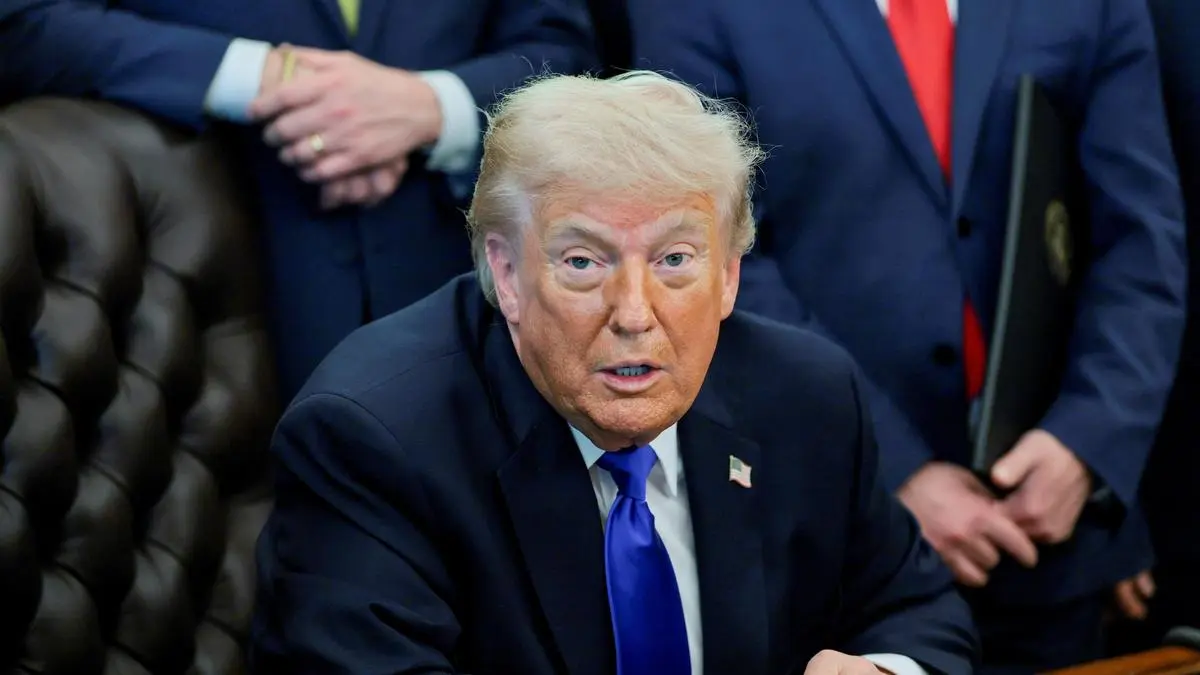
Donald Trump sat behind the Resolute Desk and looked at the phones. He wasn't describing a war, at least not in the sense of trenches and bayonets. He called it a "conflict," a word that carries the weight of a boardroom dispute rather than a battlefield. To him, the tension with Tehran isn't a tragic inevitability; it’s a high-stakes waiting game where the person who blinks first loses the house.
He claimed Iran is "dying to make a deal." It is a vivid image. It suggests a nation gasping for air, its pockets empty, its streets quiet, looking toward Washington with the desperation of a drowning man. But beneath that bravado lies a much more complex human reality.
The Weight of an Empty Wallet
Imagine a father in Isfahan. Let’s call him Reza. Reza doesn’t care about the centrifuges spinning in a concrete bunker miles underground. He cares about the price of eggs. He cares about the fact that his savings, meticulously gathered over twenty years of hard work, have evaporated like mist in the morning sun.
When the American president speaks of "maximum pressure," this is what it looks like on the ground. It isn't a bomb. It is a slow, grinding erosion of dignity. The currency tumbles. The pharmacies run out of imported medicine. The butcher shop becomes a place Reza visits only to look, not to buy.
This is the "dying" part of the equation.
The strategy is built on a singular, cold logic: if you make life difficult enough for the person across the table, they will eventually stop arguing and start signing. Trump’s assessment is that the Iranian leadership is reaching that breaking point. He sees a country pushed into a corner, its oil exports—the very lifeblood of its existence—choked off by a global superpower that controls the world’s ledgers.
A Conflict Without a Name
What do we call a struggle that kills through spreadsheets instead of shrapnel?
Trump was careful to draw a line. "I don’t want to say war," he remarked. That distinction matters. A war has a beginning and an end. A war has a clear objective and a visceral cost that the public can see on the nightly news. A conflict, however, can be permanent. It is a state of being. It is a low-grade fever that never quite breaks.
The danger of this language is that it sanitizes the stakes. By calling it anything other than war, the political cost of maintaining the pressure drops. If there are no body bags coming home to Dover Air Force Base, the American public tends to look away. But for those living in the shadow of the Strait of Hormuz, the "conflict" is plenty loud.
Consider the sailors on a tanker, watching the horizon for the sleek, fast-moving shapes of Revolutionary Guard speedboats. They aren't politicians. They are workers from the Philippines, from India, from Ukraine, caught in a geostrategic pincer movement. To them, the difference between a "conflict" and a "war" is a semantic luxury they cannot afford.
The Ghost of 1979
To understand why the phone remains silent, you have to understand pride.
In Washington, the narrative is about leverage. In Tehran, the narrative is about survival and resistance. The Iranian leadership is composed of men who remember the revolution. They built their entire identity on the idea that they would never again be bullied by a Western power.
When Trump says they are "dying" to talk, he is poking at a very specific, very raw nerve. To the Ayatollahs, coming to the table under these conditions looks like a total surrender. It looks like the end of the world they spent forty years building.
There is a psychological stalemate at play. Trump believes that if he keeps the pressure high enough, the Iranian government will have no choice but to call him. He wants to hear that ring. He wants to be the one to pick up the receiver and say, "I told you so."
But the Iranians are playing a different game. They are betting that they can endure more pain than the West expects. They are betting that the "conflict" will eventually become too expensive—or too dangerous—for the Americans to maintain. They are using their own desperation as a weapon, threatening to lash out and disrupt the global oil supply if they aren't given room to breathe.
The Invisible Ledger
The facts are stark. The Iranian economy has seen its GDP shrink significantly under the weight of sanctions. Inflation has hovered at levels that would trigger riots in any Western capital. These aren't just numbers; they are the shattered dreams of a generation of Iranians who thought they were moving toward a global future.
Yet, despite the "maximum pressure," the regime hasn't buckled. They have shifted their tactics. They have found "grey market" ways to move their oil. They have strengthened ties with eastern powers. They have learned to live in the cracks of the global financial system.
Trump's insistence that they are ready to deal is a calculated piece of theater. It’s designed to project confidence to his base and to signal to the world that he is the one in control. It's a classic negotiation tactic: tell everyone the other guy is desperate, and suddenly you have the upper hand.
But what if the phone never rings?
The Silence is the Message
We live in an era of instant communication, yet the silence between Washington and Tehran is deafening. It is a silence filled with the hum of drones, the splashing of waves against tankers, and the quiet sighs of people like Reza, who just want to know if they can afford dinner tomorrow.
The President calls it a conflict. He says it’s not a war. But for the people caught in the middle, the label doesn't change the reality. Whether it's a "deal" or a "disaster," the stakes aren't measured in headlines. They are measured in the quiet, desperate moments of ordinary lives.
The world watches the phone. Trump waits for a ring. Tehran waits for a sign of weakness. And in the meantime, the "conflict" continues, a ghost of a war that kills without a sound, dragging on in the spaces between what is said and what is actually happening.
There is no "In conclusion" here because the story hasn't concluded. The ink isn't dry because the pens haven't even been uncapped. We are simply standing in the hallway, listening to a phone that refuses to ring, wondering how much longer the silence can last before something finally breaks.
The Resolute Desk is solid. The phones are black and heavy. The air is still.
Somewhere, thousands of miles away, a man counts his remaining coins and wonders if anyone is actually listening.