Amazon just fired a shot that should make Every UPS and FedEx executive lose sleep. It’s called Amazon Supply Chain Services (ASCS), and it’s not just another shipping option. It’s a total externalization of the most expensive, most complex machine ever built: the Amazon logistics network.
If you’ve followed the tech world for the last two decades, this story feels familiar. In the early 2000s, Amazon built a massive internal computing infrastructure to handle its own retail spikes. Then, they realized they could rent that excess capacity to other people. That became AWS, a business that now generates more than $100 billion in annual revenue and essentially powers the modern internet.
Now, they’re doing the exact same thing with physical goods. They’ve spent twenty years and billions of dollars building 200 fulfillment centers, a fleet of 100 aircraft, and 80,000 trailers. Monday’s announcement means they’re officially opening those doors to everyone—even companies that don’t sell a single item on the Amazon store.
The AWS Playbook for Physical Atoms
The brilliance of the AWS model wasn't just about selling server space. It was about turning a massive "cost center"—the expensive servers and developers needed to run a website—into a "profit center." Before AWS, if you wanted to start a tech company, you had to buy your own servers. It was slow and expensive.
Logistics is currently in that "slow and expensive" phase for most brands. If you're a mid-sized retailer, you're juggling ocean freight forwarders, drayage companies, 3PL warehouses, and then praying that FedEx or UPS doesn't hike your rates during peak season.
Amazon is stepping in to say: "Stop doing that. Just use our pipes."
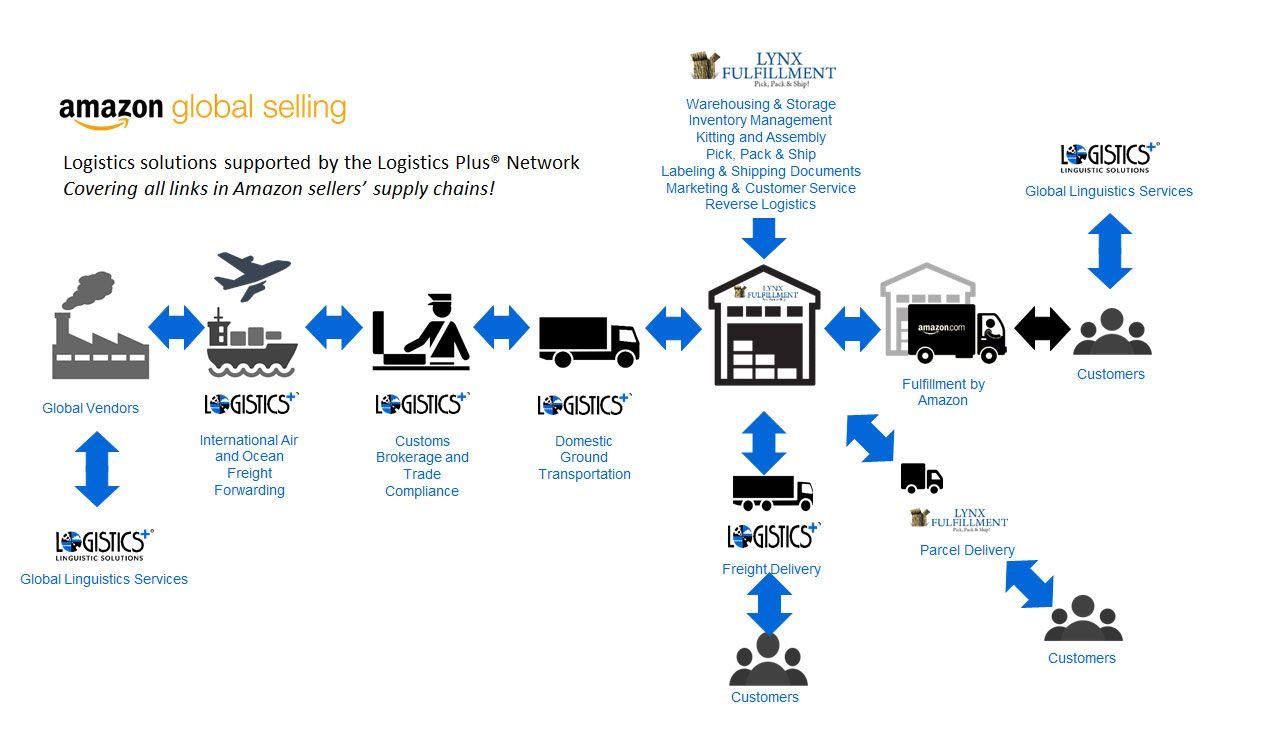
They aren't just offering to deliver a package from point A to point B. They’re offering the whole stack:
- Global Freight: Moving raw materials or finished goods via ocean, air, and rail.
- Warehousing: Storing bulk inventory in their massive distribution centers.
- Smart Placement: Using their AI to predict where your customers are and moving your inventory closer to them before they even order.
- Last-Mile Delivery: The "brown van" part of the equation that reaches the customer's porch seven days a week.
Why Rivals are Rattling
The stock market didn't take this news lightly. When the announcement hit on May 4, 2026, FedEx shares dropped over 9%, and UPS fell 10%. Why the panic? Because Amazon doesn't just compete on price; they compete on infrastructure density.
Most carriers rely on a hub-and-spoke model. Amazon's network is a decentralized web. Because they already deliver millions of their own packages, their marginal cost to add your package to the same van is incredibly low. FedEx and UPS have to maintain their own massive networks solely on the backs of their shipping customers. Amazon’s shipping business is subsidized by its own retail volume.
This isn't just theory anymore. Major players like Procter & Gamble and American Eagle are already signed up. When a company the size of P&G decides to move raw materials through Amazon’s freight network instead of a traditional carrier, it signals a massive shift in trust.
The Hidden Data Advantage
There's an angle people aren't talking about enough: the data. When you use Amazon Supply Chain Services, Amazon gets a front-row seat to your entire business flow. They see what raw materials you're buying, where your factories are, and exactly where your customers live.
For some brands, this is a deal-breaker. They don’t want the "Everything Store" knowing their trade secrets. But for others, the efficiency gains are too big to ignore. If Amazon can cut your logistics costs by 15% and increase your delivery speed by two days, can you really afford to say no because of "data privacy" concerns?
The Middleman is Under Fire
Third-party logistics (3PL) providers are the ones who should be truly terrified. Most 3PLs are fragmented. They own a few warehouses or a fleet of trucks, but they don't own the whole chain. Amazon is offering a "single pane of glass" view. You log in, click a few buttons, and your goods move from a factory in Vietnam to a doorstep in Ohio without you ever calling a broker.
We’re seeing the "API-ification" of the physical world. Just as you can spin up a server with a line of code on AWS, you can now move a container of yoga mats with a few clicks on ASCS.
Is This Right for Your Business?
Don't jump in just because of the brand name. Amazon’s system is built for high-velocity, standardized goods. If you’re selling custom-made machinery or hazardous materials that require "white-glove" handling, a specialized carrier is still your best bet.
But if you’re a consumer brand trying to compete with the "Prime Effect"—that psychological need customers have for two-day shipping—you basically have two choices:
- Build a world-class logistics team and spend millions on warehouse leases.
- Plug into Amazon’s grid.
For most, the second option is the only one that makes financial sense.
What You Should Do Now
If you’re managing a supply chain, don't wait for your boss to ask about this. Start by auditing your "landed cost" for your top five products. Compare that to the quotes coming out of the new ASCS dashboard.
Check the "unbundled" options first. You don't have to give Amazon your whole business. Maybe you just use them for ocean freight because their scale gets better rates than your broker. Or maybe you use them only for "overflow" storage during the holidays.
The goal isn't necessarily to move everything to Amazon—it's to use their existence as a hammer to negotiate better deals with your current providers. FedEx and UPS are going to be very hungry for your business over the next twelve months. Use that to your advantage.
The logistics world just got a lot smaller, and the "AWS of Atoms" is officially open for business. Make sure you aren't the one left paying the "legacy" tax.