The headlines are screaming about a $4.50 gallon of gas. They want you to believe that Iran’s latest "counter-strike" against Trump’s blockade is a death knell for the global economy. It’s a tired, predictable script. Every time a tanker moves in the Strait of Hormuz or a new set of sanctions drops from Washington, the "experts" dust off the same 1970s playbook. They tell you to brace for an energy apocalypse.
They are wrong.
The belief that Iran still holds the world’s throat via the oil pump is a legacy delusion. It ignores the fundamental physics of the modern energy market and the brutal reality of North American production. If you’re betting on a sustained price spike based on Iranian posturing, you aren't just misinformed. You’re ignoring the last decade of industrial evolution.
The Hormuz Hoax
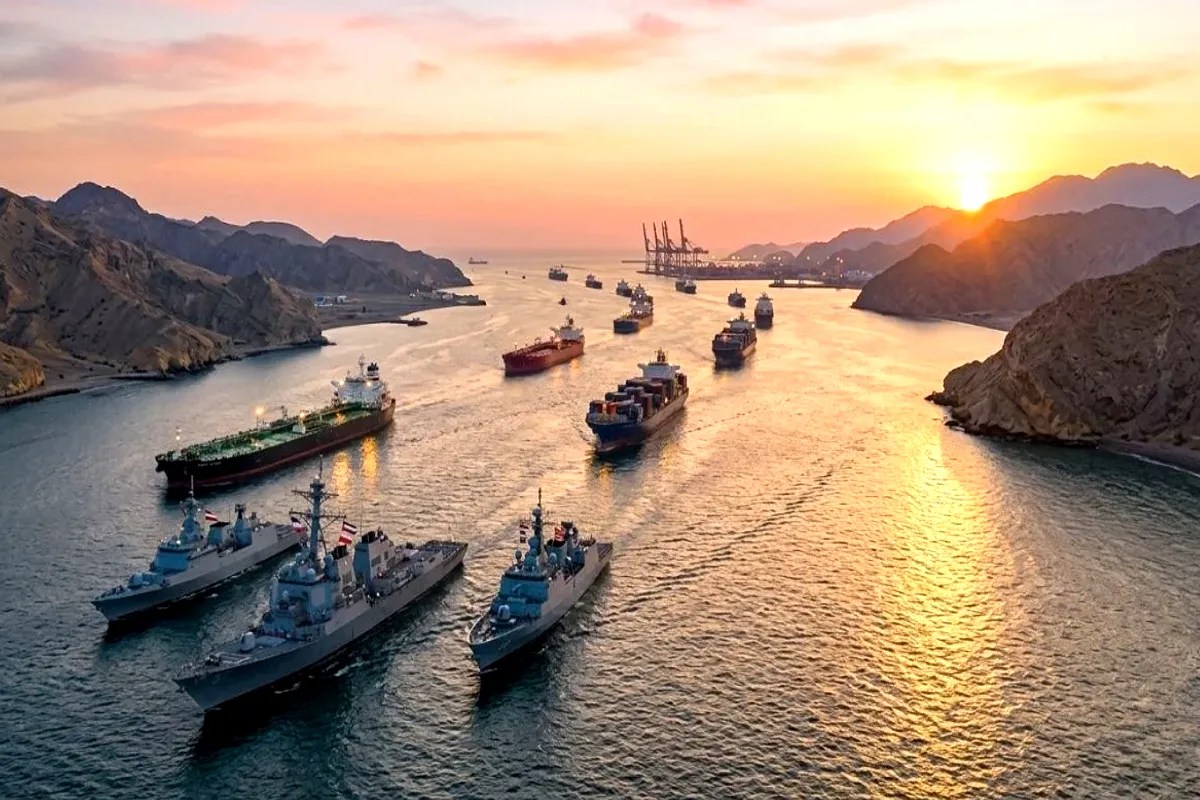
The "lazy consensus" hinges on the Strait of Hormuz. We’ve all seen the maps. That narrow chokepoint where 20% of the world’s oil flows. The narrative says if Iran closes the gate, the world stops spinning.
It’s a bluff.
Closing the Strait is the geopolitical equivalent of a suicide vest. Iran’s own economy—what’s left of it—relies on those same waters. More importantly, the Chinese, who are Iran’s primary customers and only real diplomatic shield, would be the first to suffer. Beijing doesn't tolerate disruptions to its manufacturing input costs. If Tehran shuts the Strait, they aren't just fighting Trump; they are declaring economic war on their only remaining friend.
Furthermore, the "blockade" isn't what it used to be. I’ve watched commodity traders hedge against these threats for fifteen years. The "fear premium" is real, but it’s increasingly short-lived. Why? Because the world has built workarounds. Saudi Arabia and the UAE have invested billions in pipelines that bypass the Strait entirely, moving crude directly to the Red Sea or the Gulf of Oman. The chokepoint is still a bottleneck, but it’s no longer a noose.
Why $4.50 Gas is a Math Problem, Not a War Problem
The competitor article claims $4.50 gas is inevitable. Let’s look at the actual mechanics of a gas station price sign. Crude oil is only one part of the equation. To get to $4.50 national average in the US, you need a perfect storm of refining failures, high taxes, and a sustained Brent crude price north of $120.
The US is now the largest oil producer in history. We are pumping over 13 million barrels per day. This isn't the 1973 embargo. When prices tick up, the Permian Basin doesn't hide; it scales. The moment oil hits $90, every idle rig in Texas and New Mexico becomes a profit machine. This "shale ceiling" acts as a natural dampener on global prices. Iran can threaten all they want, but they cannot out-produce the efficiency of an American fracking crew looking to cash in on a price spike.
The Myth of the "Unified" OPEC Response
The competitor assumes OPEC+ will sit back and watch Iran drive the bus. This is a fundamental misunderstanding of cartel psychology.
The relationship between Tehran and Riyadh is one of managed animosity. If Iran’s supply is throttled by sanctions, Saudi Arabia doesn't weep; they check their market share. The Saudis have massive spare capacity. They want prices high enough to fund their "Vision 2030" projects, but low enough to keep American shale from stealing more of the market. They have zero interest in seeing $150 oil that triggers a global recession and destroys demand for the next decade.
The Refining Bottleneck is the Real Ghost
If you want to be scared of something, stop looking at Iran and start looking at the Gulf Coast refineries.
We haven't built a major new refinery in the United States since the mid-1970s. We are running a fleet of aging, complex machines at 90% capacity just to keep up with current demand. When gas prices hit $4.50, it’s almost never because of a shortage of "rocks" (crude). It’s because of a shortage of "cooks" (refining capacity).
A hurricane in Louisiana or a fire in a New Jersey refinery does more to hike your gas price than a dozen Iranian speedboats in the Persian Gulf. By focusing on the geopolitical drama, the media ignores the crumbling infrastructure right in our backyard. It's easier to sell a story about a foreign villain than a story about domestic underinvestment.
The Sanctions Paradox
Sanctions are often touted as a blunt instrument that removes supply. In reality, they just reroute it.
I have seen the "dark fleet" in action. Hundreds of aging tankers with obscured transponders, swapping oil at sea, moving Iranian crude into Asian markets under different labels. The oil doesn't vanish. It just gets a discount. China and India buy this "illicit" oil at $20 below market rates, which actually lowers the global weighted average price of energy for the world's largest consumers.
In a weird twist of economic irony, Trump’s "blockade" might actually be subsidizing Chinese manufacturing by forcing Iran to sell its oil at fire-sale prices. The world isn't losing the barrels; the Iranian treasury is just losing the profit.
Stop Asking if Gas Will Hit $4.50
The question itself is a distraction. The right question is: "Is the world’s energy system resilient enough to ignore the Middle East?"
The answer is increasingly "Yes."
We are seeing a decoupling of global growth from Middle Eastern stability. The rise of EVs—not as a "green" crusade, but as an efficiency play in fleet management—is shaving the top off global demand growth. The expansion of LNG (Liquefied Natural Gas) means power grids are less reliant on oil-fired generators.
If gas hits $4.50, it will be a temporary spike driven by speculative panic and algorithmic trading, not a structural shift in the balance of power. The "counter-strike" from Iran is a PR move designed to project strength to a domestic audience. It is not an economic reality that can withstand the sheer weight of global supply.
The Volatility Trap
If you’re a business owner or a consumer, the danger isn't the price—it’s the volatility.
The media feeds on the volatility because it creates clicks. The "expert" quoted in the competitor's piece thrives on the fear because it sells consulting hours. But if you look at the long-term trend, the inflation-adjusted price of gasoline has remained remarkably stable for decades. We are currently living through a period of incredible energy abundance, yet we are being told we are on the brink of a shortage.
Don't buy the hype.
Iran's "blockade" is a ghost story told to people who don't understand how a pipeline works. The global economy has already priced in the Iranian threat. It’s been priced in since 1979. The real "game" isn't about who has the oil; it's about who has the technology to extract it, refine it, and move it without caring what happens in a 21-mile wide strip of water.
The world is moving on. Tehran is just shouting at the tide.
Buy the dip. Ignore the noise. The $4.50 apocalypse is canceled.